

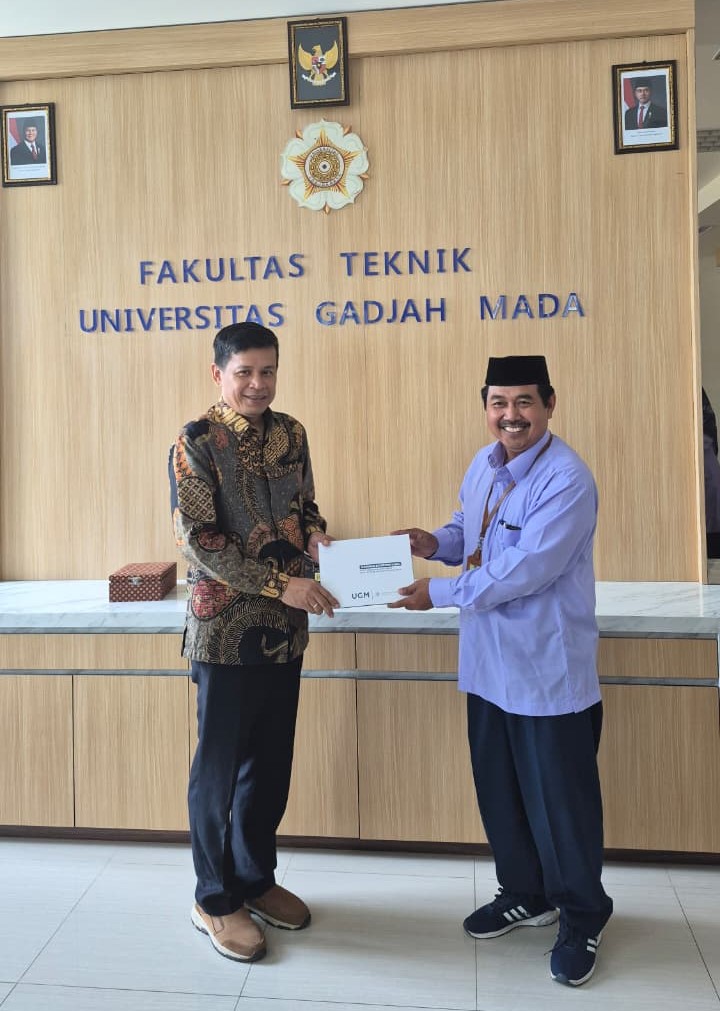
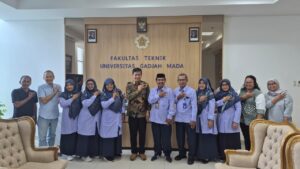
Sleman (MAN 3 Sleman) – As a concrete step in supporting the Mayoga Gemilang innovation program, a delegation from MAN 3 Sleman conducted an educational visit to the Faculty of Engineering, Universitas Gadjah Mada (FT UGM) on Friday (March 6, 2026). The visit focused on a benchmarking study of sustainable waste management aimed at transforming students’ mindset from simply “disposing of waste properly” to “processing waste from its source.”
Based on recommendations from the Environmental Agency (DLH), FT UGM was selected as a reference due to its success in implementing reliable waste management technology. The MAN 3 Sleman delegation was warmly welcomed by the Head of the Administrative Office of FT UGM, Doni Agus Wijayanto, S.E., M.M.
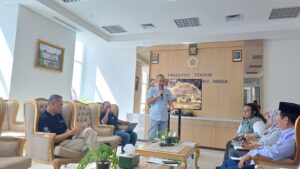
In his remarks, Doni emphasized that FT UGM does not only focus on academic excellence but also maintains a strong commitment to environmental sustainability.
“We promote a learning culture that is not limited to knowledge alone, but also learning from the environment through the principles of SHE (Safety, Health, and Environment) and integrity. We hope that the collaboration between FT UGM and Mayoga will not stop here but will continue in a sustainable manner,” Doni said.
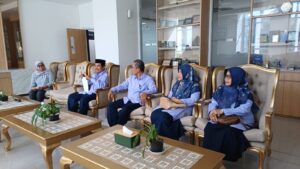
The Principal of MAN 3 Sleman, Singgih Sampurno, S.Pd., M.A., explained that the visit aimed to gain technical insights into establishing a waste bank and an effective waste-sorting system. This initiative is considered urgent, considering the significant amount of waste produced within the madrasah environment.
A speaker from FT UGM, Daniel Tanto, S.I.Kom, presented a mathematical overview of the waste management burden that needs to be addressed. With a student population of approximately 1,900 students from three madrasahs, and assuming that each individual produces 0.3 kg of waste, the estimated total daily waste reaches:
1900 × 0.3 = 570 kg per day.
Daniel emphasized that waste management must be carried out professionally using the principles of Calculated, Recorded, and Measurable. He also explained the importance of sorting waste into categories such as organic waste, recyclable inorganic waste, and non-recyclable waste, as well as implementing special management strategies during events that generate a sudden increase in waste.
Furthermore, he highlighted the importance of establishing partnerships with off-takers to manage residual waste so that it does not accumulate in landfills.
This initiative is part of the Ecotheology program promoted by MAN 3 Sleman, which includes activities such as fish seed distribution, bird releases, and tree planting. Currently, Mayoga has also actively collaborated with LP3R and involved local community members in maintaining environmental sustainability.
Through facilitation and mentoring from FT UGM, MAN 3 Sleman hopes to replicate waste processing technology within the madrasah environment to foster stronger environmental awareness and responsibility among students. (isn)
Contributor: Isni Kurnia
Editor: M. Taufikurohman


